Meet your
new city.
A social app that builds groups of 4–6 strangers each month and facilitates their exploration of a new city together.
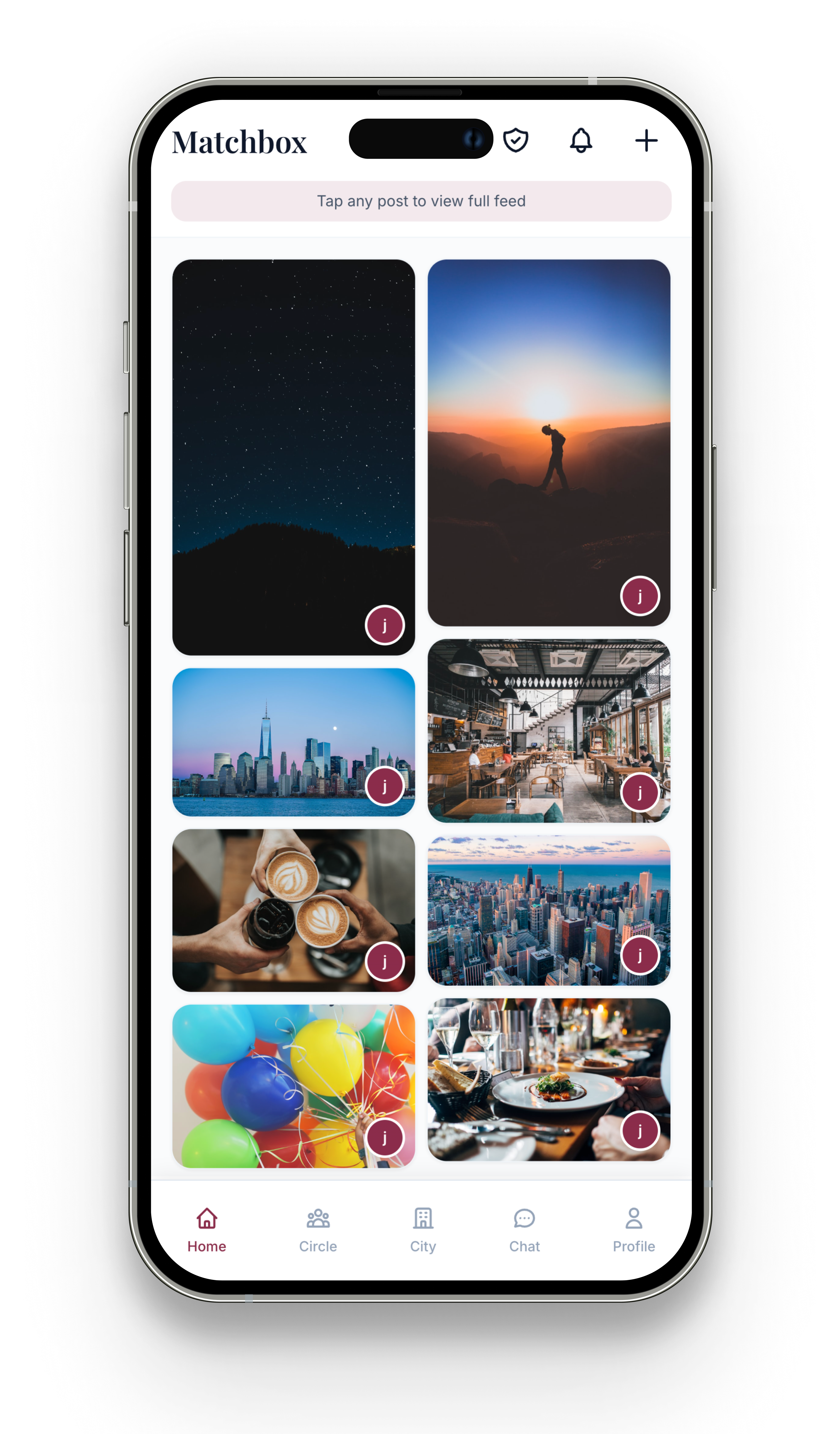
A social app that builds groups of 4–6 strangers each month and facilitates their exploration of a new city together.
Matchbox targets young professionals who’ve just moved to a new city. Think Bumble BFF, but without the 1:1 pressure. Instead of pairing strangers, Matchbox forms small groups and gives them reasons to go out and explore together.
The app includes a dynamic matching algorithm designed to optimize group chemistry based on interests, personality traits, and location preferences. This is my most fleshed-out design project and full case study.
Living in three major cities during my college career exposed me to a common issue among young professionals: the struggle of meeting new people without the structure of a college campus. Existing apps are built around the same 1:1 connection model used for dating, which can feel high-pressure, awkward, and risky. I wanted a lower-stakes way to meet people and organically build a social circle, not through forced small talk with one stranger at a time.
Matchbox removes the pressure by crafting small groups instead of pairs. Each month, users are matched into a group of 4–6 people with complementary interests and traits. The platform then suggests activities and places to explore together, building relationships through shared experiences rather than forced conversation.
Getting started is quick and personal. Users create their profiles by answering a series of questions about themselves, including interests, personality, and who they are in a conversation. This data, along with logistical information like location and availability, feeds directly into the matching algorithm.
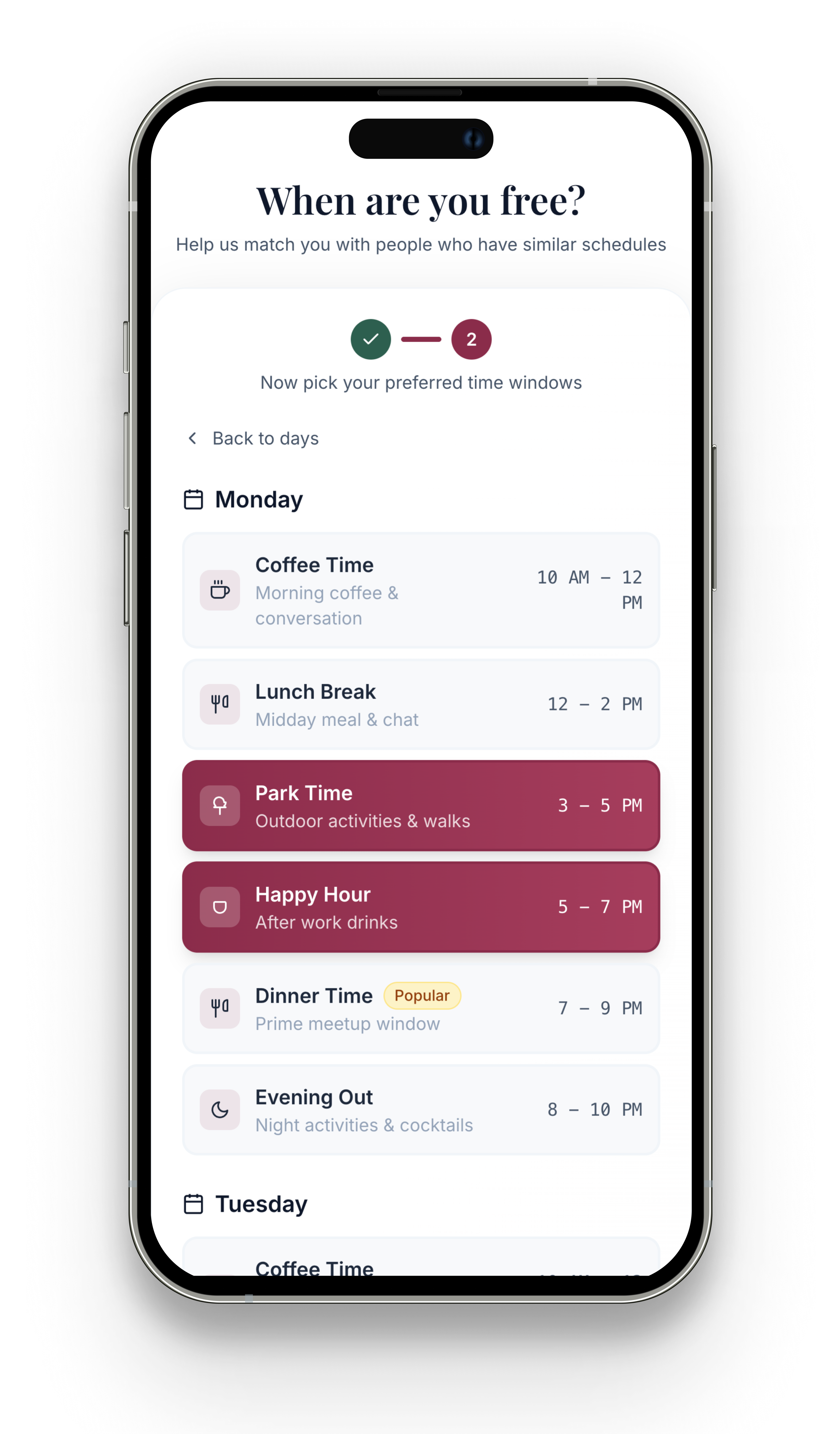
I developed a matching algorithm that considers personality dimensions, interest overlap, location proximity, and schedule compatibility. The algorithm optimizes for group diversity while ensuring enough common ground for natural connection. Groups are refreshed monthly to keep the experience fresh and expand social circles over time.
The city board is the heart of exploration. It surfaces curated events and venues tailored to each group’s shared interests. Users can browse what’s happening nearby and find places that match the group’s vibe.
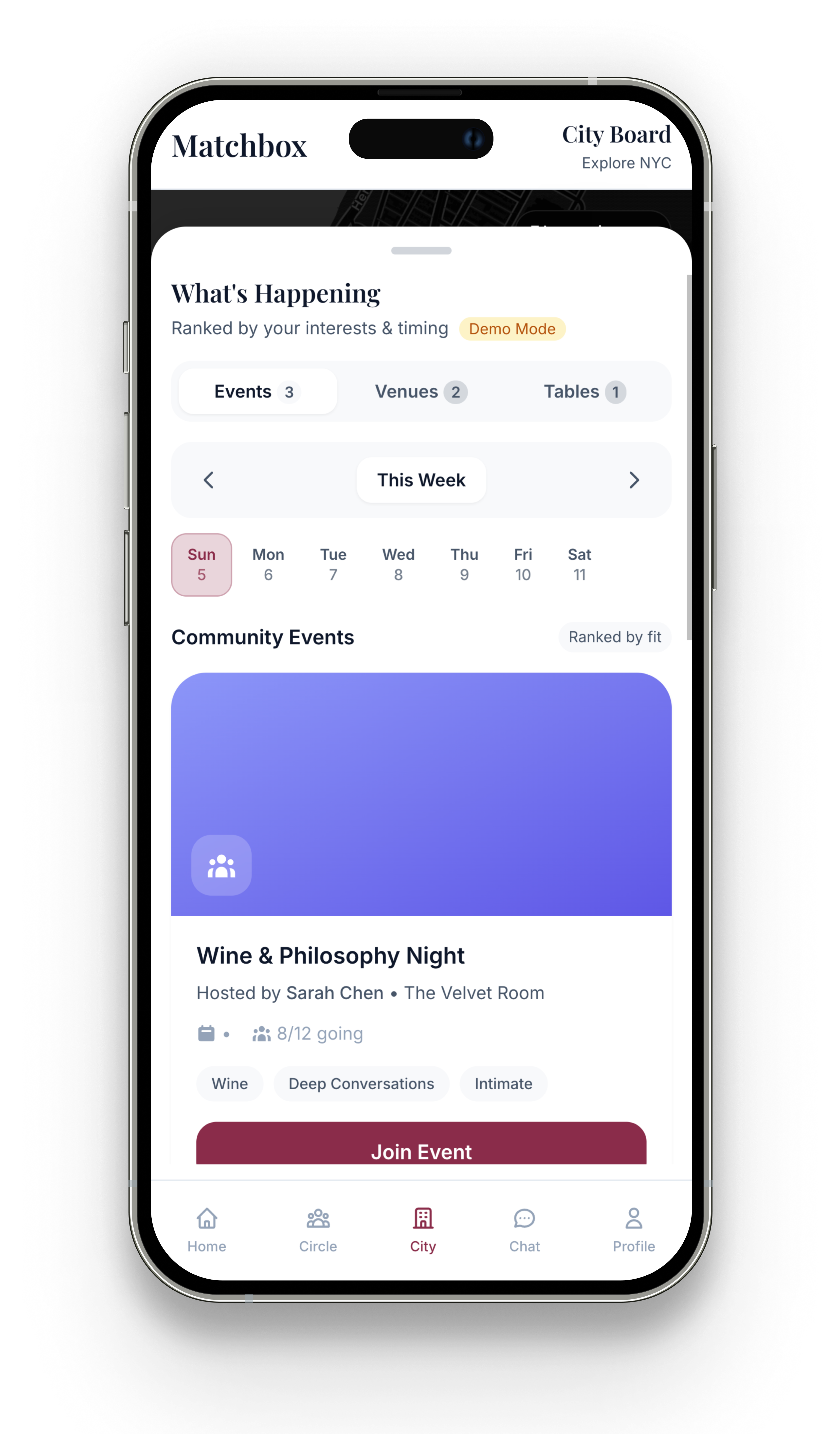
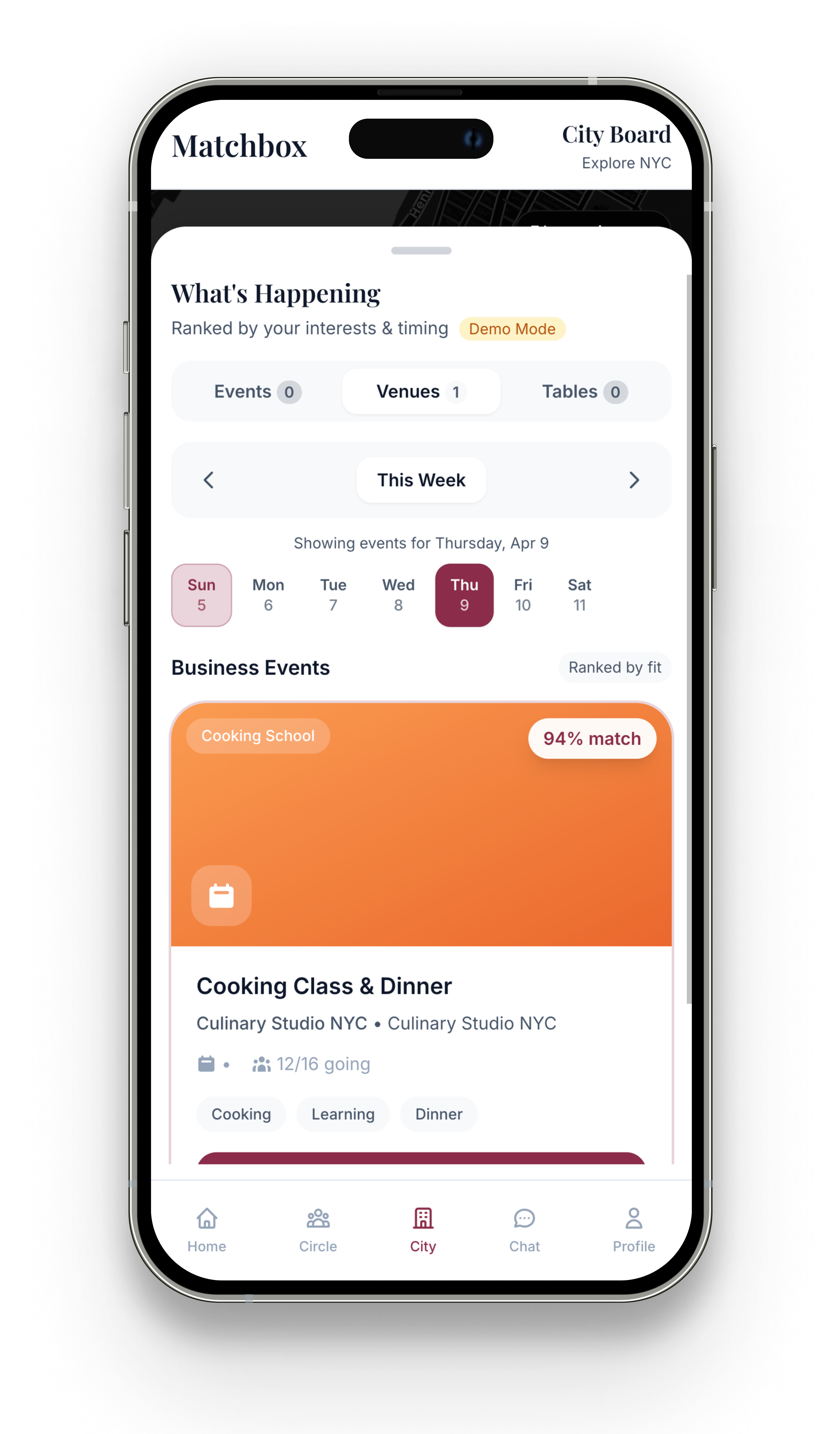
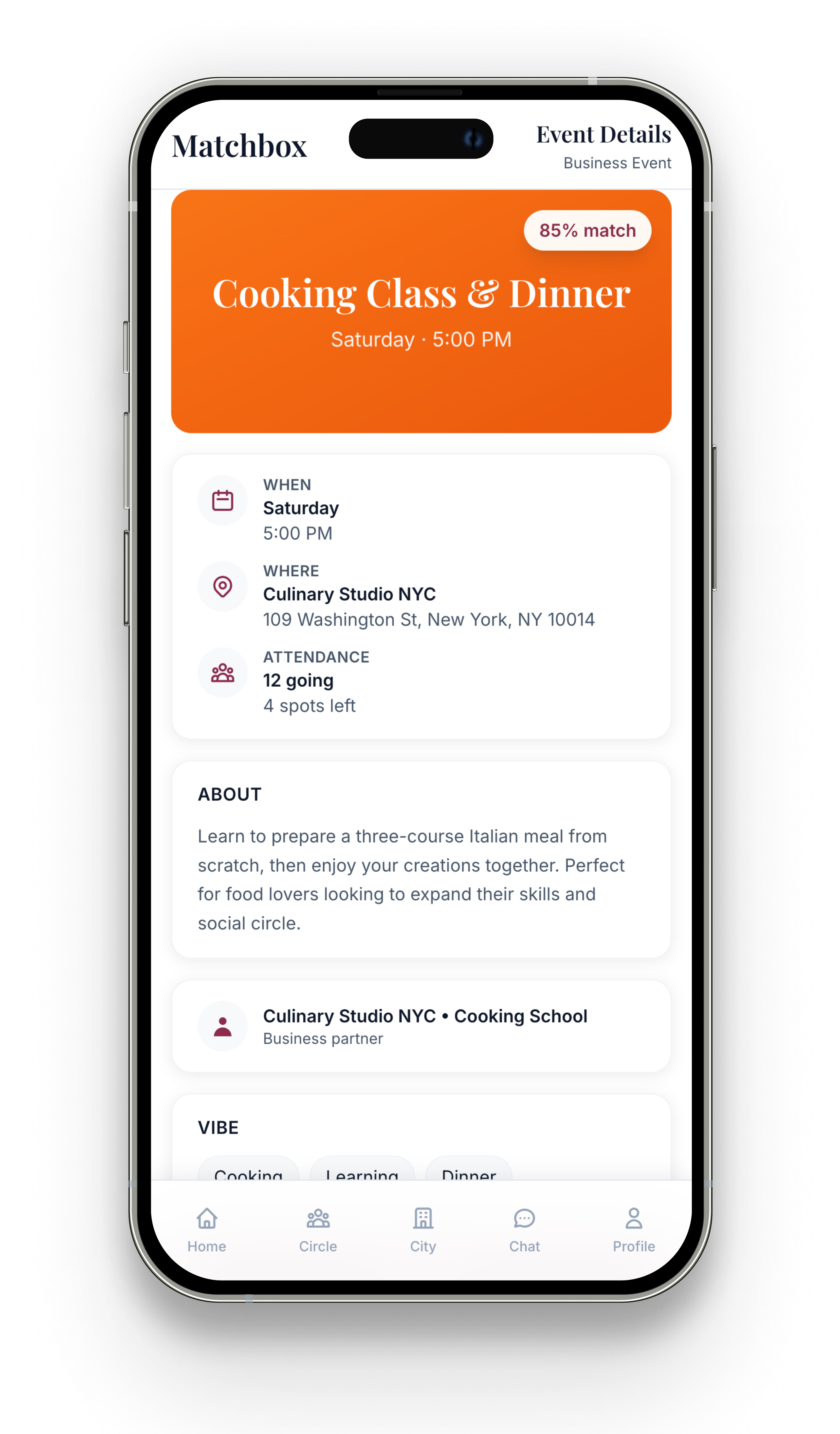
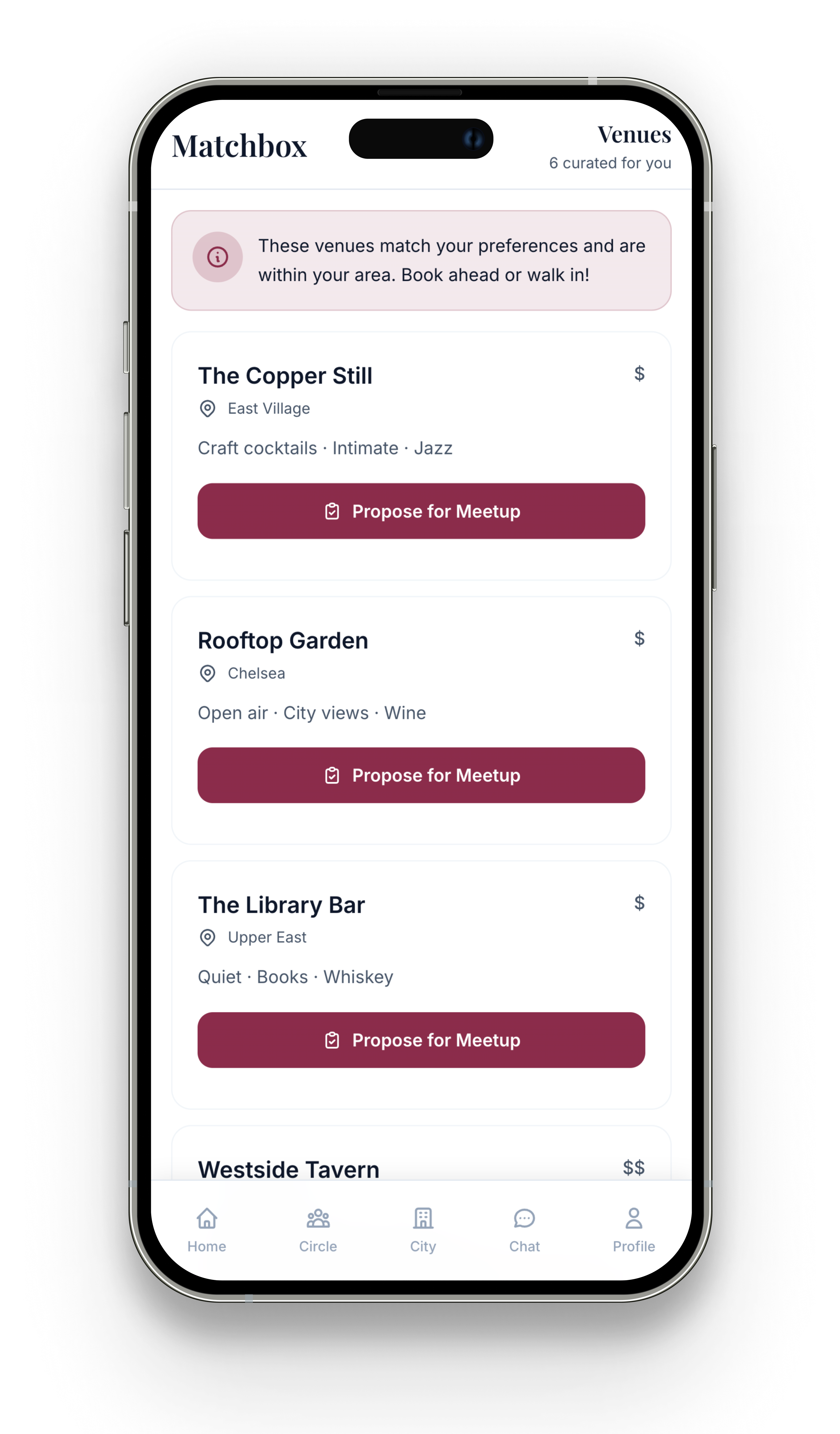
Diving deeper into an event or venue reveals all the details the group needs to make a decision. The venue selection flow makes it easy to propose a spot to the group and coordinate plans without the back-and-forth.
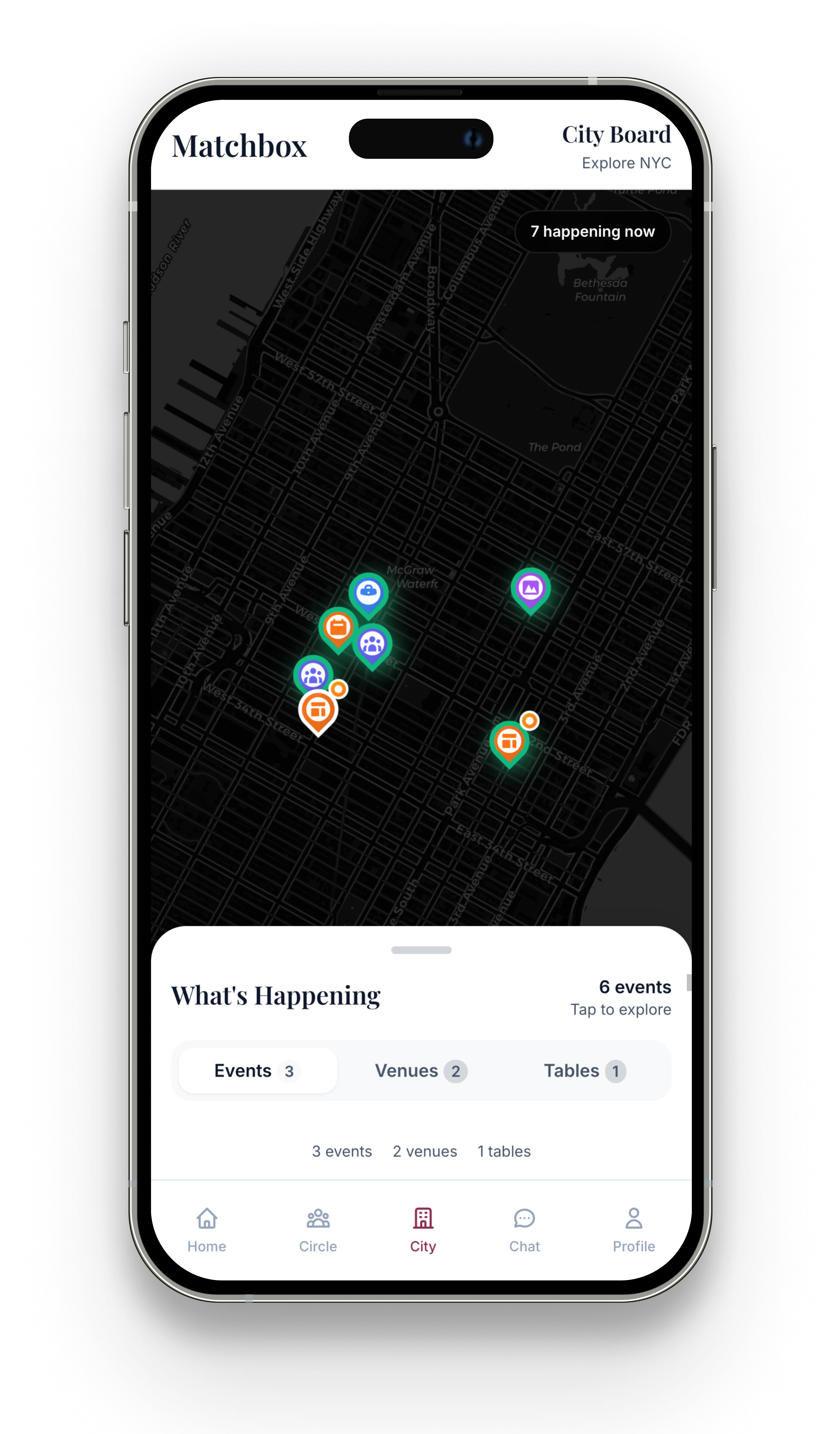
A spatial way to explore the city. The map surfaces venues, events, and group activity in a single glanceable view, making it easy to find something nearby or plan around a neighborhood.
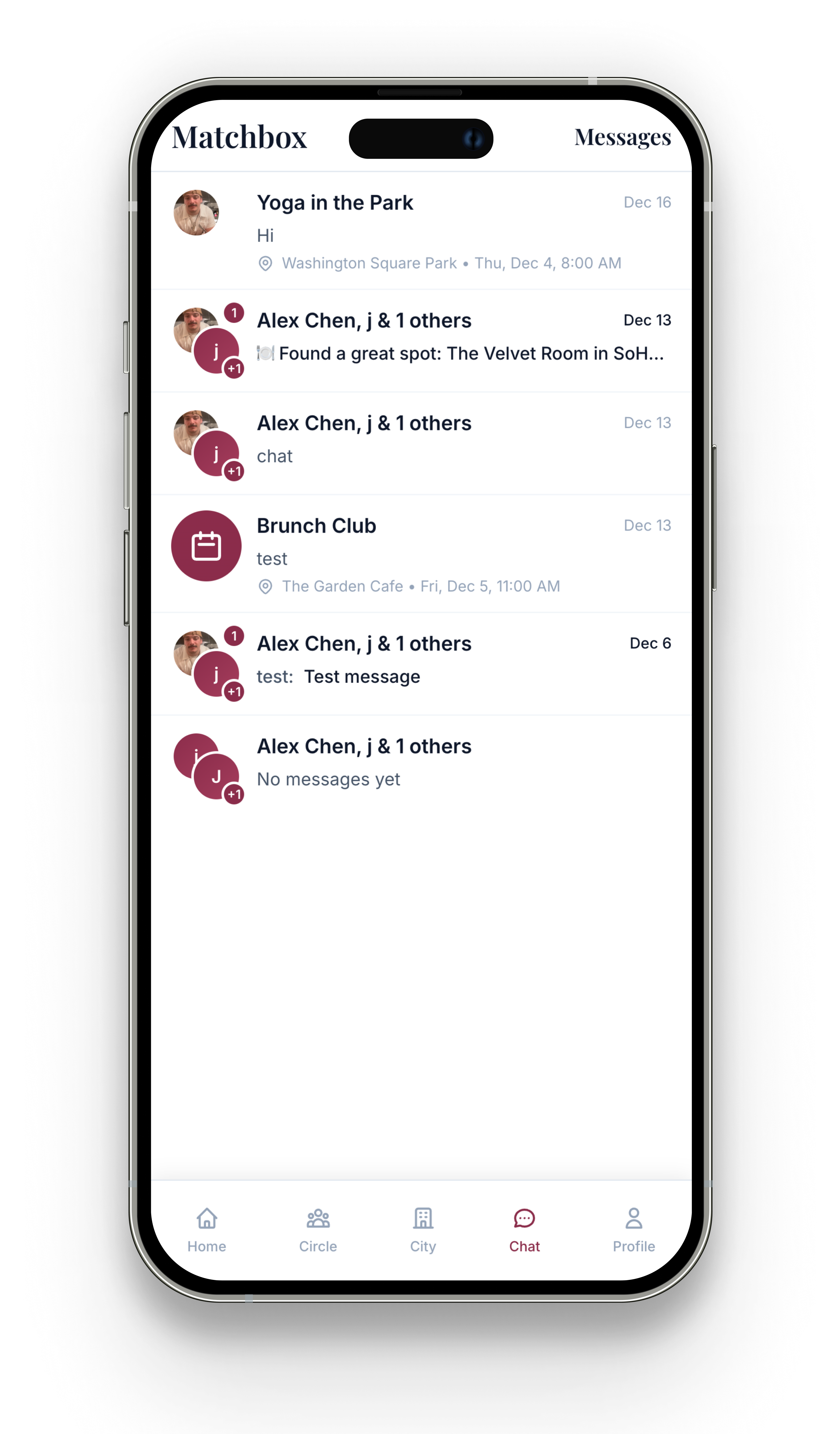
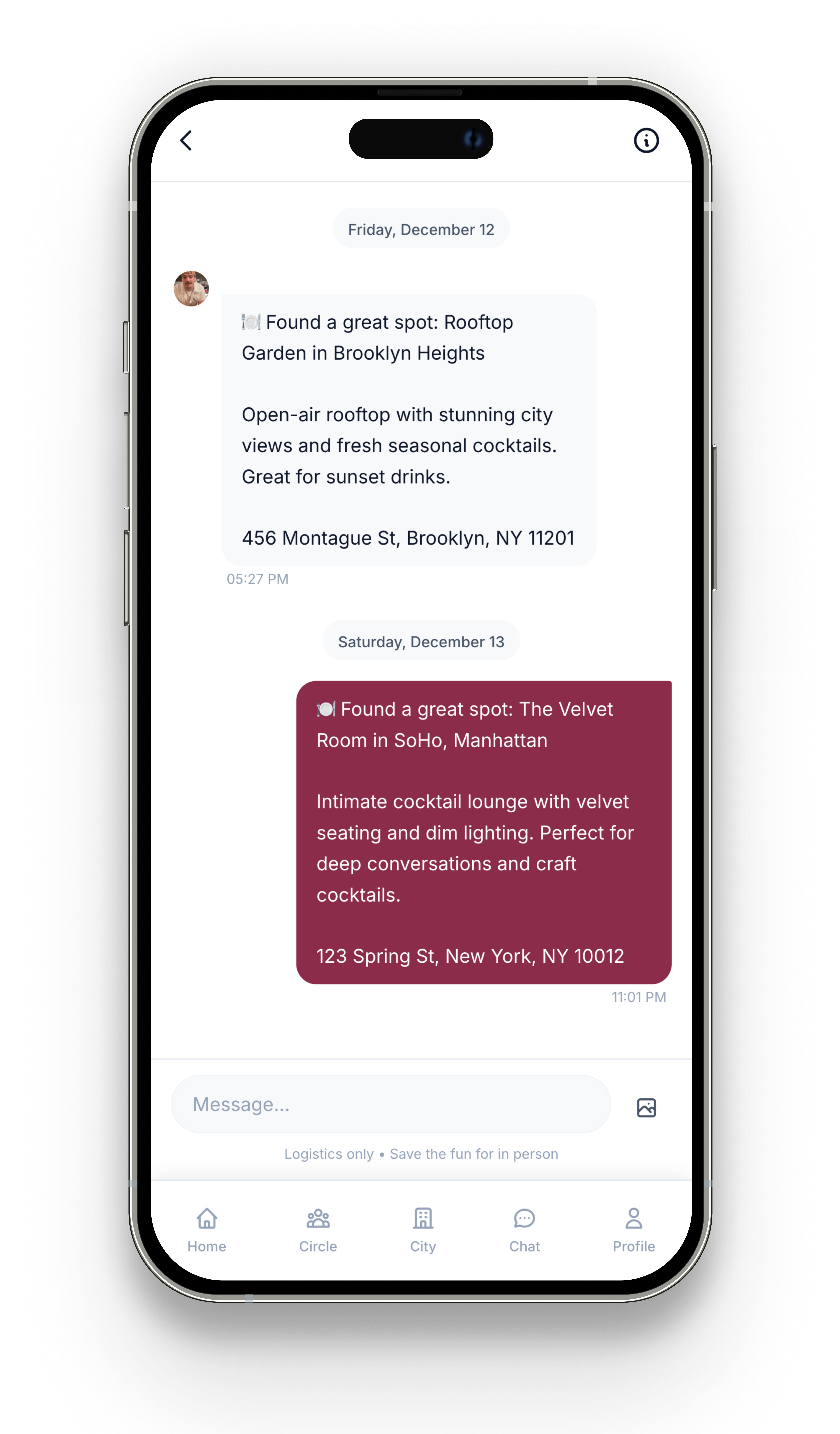
Each group gets a dedicated chat space. The messaging system is designed to feel casual and low-pressure, more like a group text than a formal chat. Conversations stay organized and accessible from the messages hub.
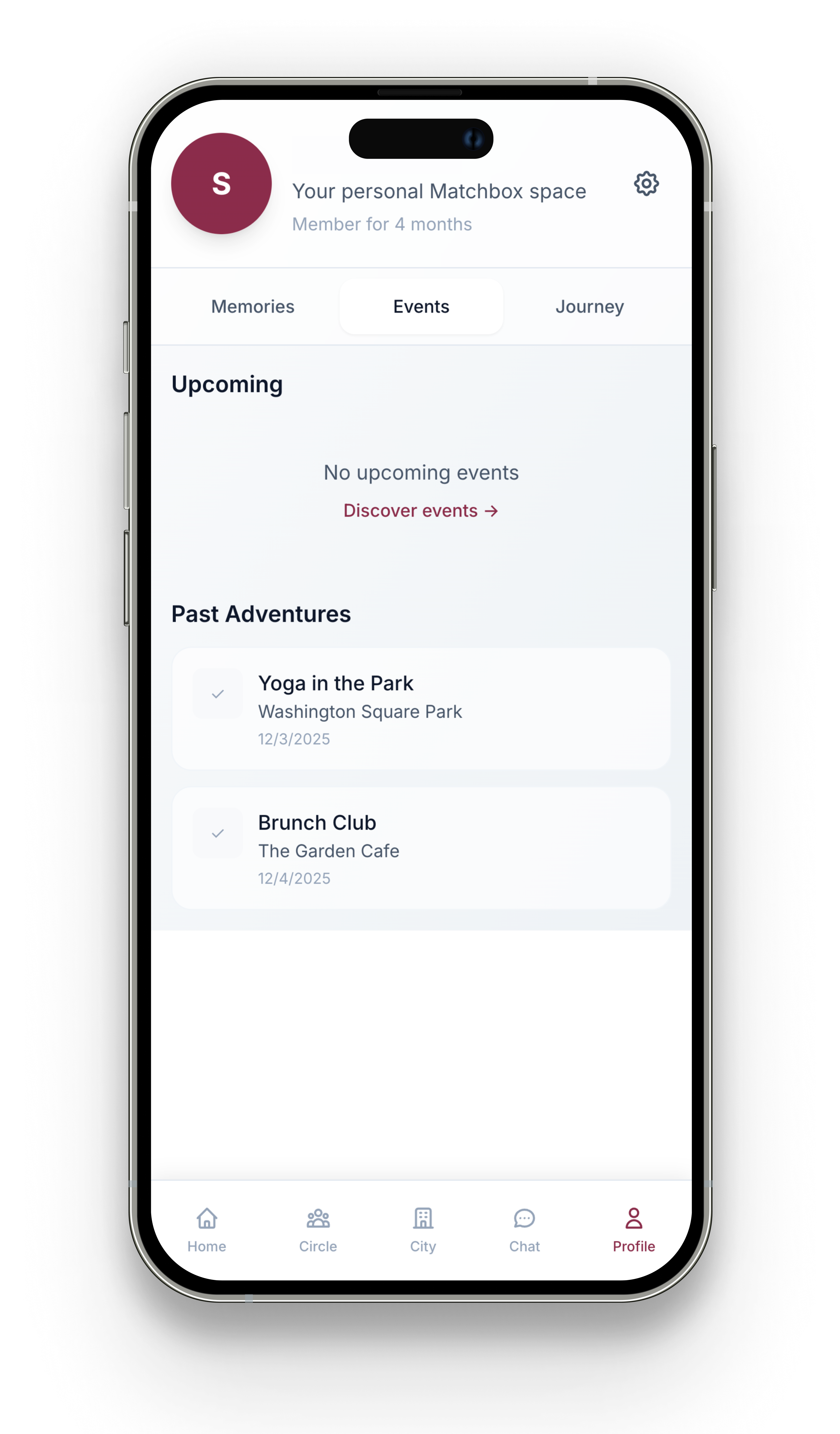
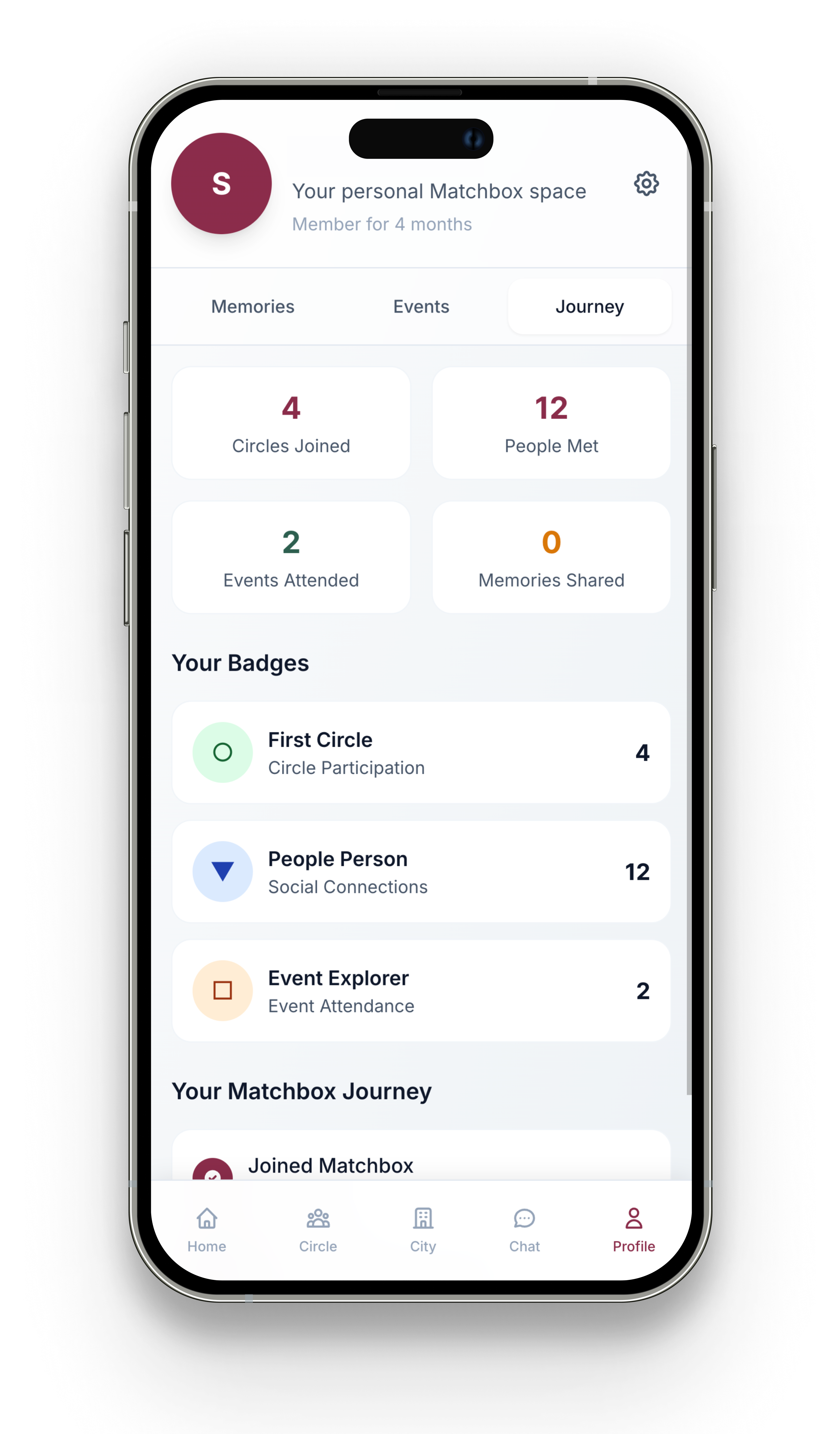
Your profile tells your story. It tracks the events you’ve attended and maps your journey through the city over time. It’s part social proof, part personal scrapbook, a record of the connections you’ve made and the places you’ve been.
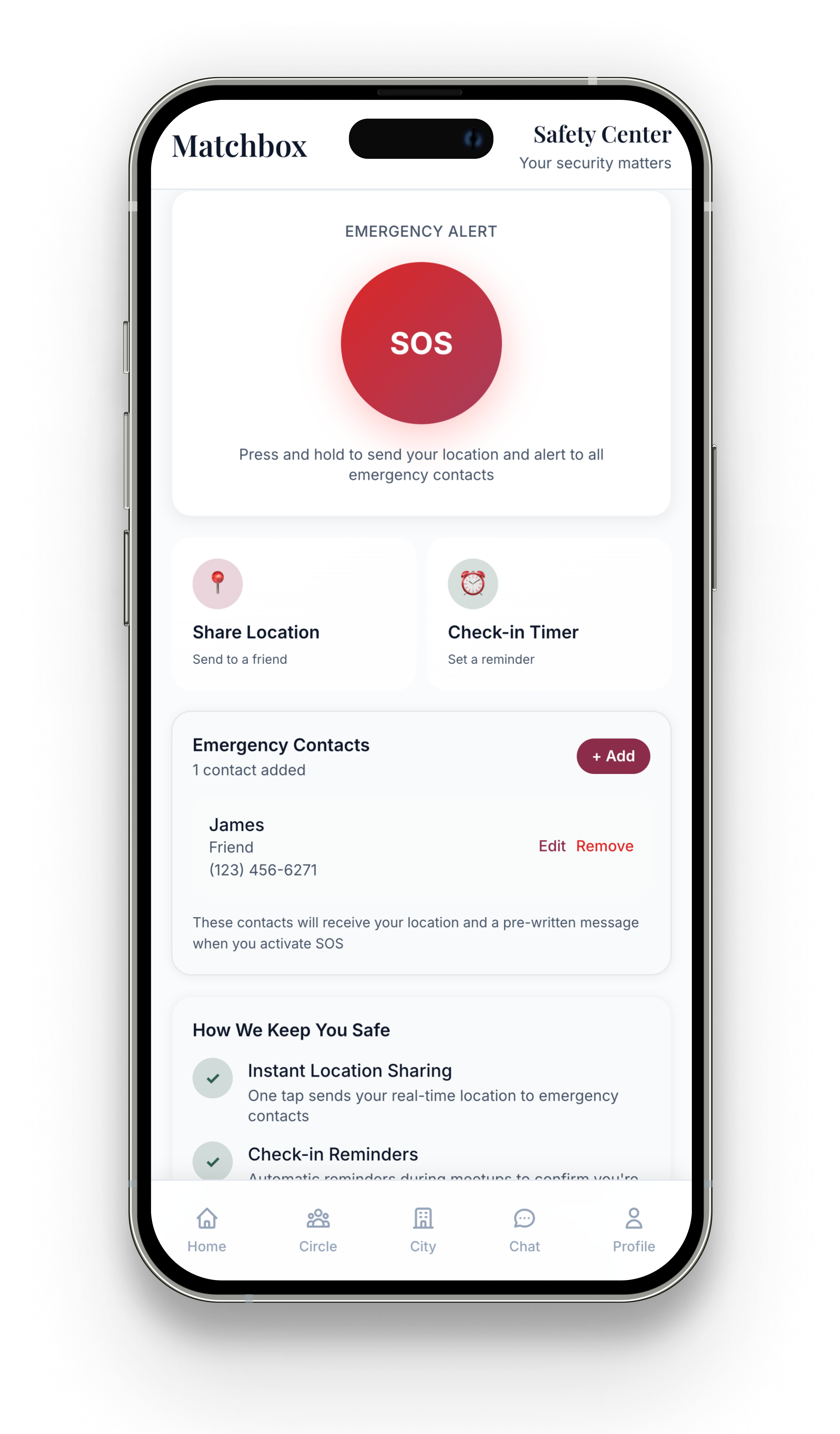
Meeting strangers requires trust. The SOS feature gives users a discreet safety net, a quick way to alert contacts or exit a situation. It’s always accessible and designed to be used without drawing attention.
Matchbox pushed me to think deeply about social dynamics, trust, and how design can lower the barriers to human connection. The matching algorithm was a particularly rewarding challenge, balancing diversity with compatibility and making the math feel invisible behind a warm, inviting interface.
If I were to continue this project, I’d explore feedback loops after each monthly cycle, deeper personalization of the city board, and ways to let groups that click extend beyond their initial month together.